India MICE sector FY27 revenue above 40000 crore.
India's MICE (meetings, incentives, conferences, events) sector revenue trajectory has run from approximately 26000 crore rupees in FY24 through 32000 to 35000 crore in FY25 toward an expected 37000 to 39000 crore in FY26. The Gajakesari yoga activation peak through transit Jupiter exalted in sidereal Cancer on the India 1947 natal Moon plus the D10 dasamsa career-and-public-arena reading argues the EEMA and IMEX India FY27 aggregate, released through the Q2 to Q3 FY28 industry-report window, will print above the 40000-crore threshold.
Chart-side mechanism: Gajakesari yoga is the classical Jupiter-in-kendra-from-Moon configuration, with the planet Jupiter (institutional expansion, wisdom, recognised gatherings, scholarship) placed in a kendra house from the Moon (the public, the mass-attended environment, the broad audience). The yoga fires natally on the India 1947 chart: natal Jupiter sits at Libra 28.84 degrees in the fourth house from the natal Moon at Cancer 5.11 degrees, with the fourth house being a kendra in the classical reading. The yoga is structurally active across all dasha periods on the chart, with activation strength varying by period and transit. The D10 dasamsa is the classical divisional chart for career, professional reputation, public-arena work and the recognised-public-event signification. On the India 1947 D10, the principal public-arena significator planets sit in a structurally favourable configuration through the Rahu Mahadasha window. The Jupiter exalted-Cancer transit through mid-2027 places transit Jupiter directly on the natal Moon at Cancer 5.11 degrees, which is the maximum-strength Gajakesari activation in the current Vimshottari cycle. The chart-side reading is the four-layer composition (Gajakesari yoga natal firing + D10 dasamsa public-arena reading + Rahu Mahadasha period state + Jupiter exalted-Cancer transit on natal Moon) the engine produces against the canonical natal record.
Calibration tier: structural. No specific lift figure. Reconciliation within 60 days of the FY27 aggregate industry report publication, by 31 December 2027.
What this window typically looks like
Below is the reconciliation calendar from window open through reconciliation publication plus the second-order indicators a reader can track day-by-day to monitor whether the structural call is firing or fading.
Reconciliation calendar
| Date | Event | Why it matters |
|---|---|---|
| 22 Feb 2026 | Rahu Mahadasha opens on India 1947 chart | Chart-side period state activates the unconventional-expansion signature across the entire FY27 window |
| 1 Apr 2026 | FY27 window opens | Indian fiscal year 2026-27 begins; MICE sector revenue tracks from this date |
| Q1 FY27 (Apr-Jun 2026) | Jupiter exalted-Cancer transit conjuncts natal Moon | Gajakesari yoga activation peak through the transit-Jupiter-on-natal-Moon configuration; maximum-strength institutional-gathering signature |
| Jul-Sep 2026 | Q2 FY27 corporate conference cluster | Annual offsite and Q2-results-period investor day calendar peaks; substantial MICE revenue cluster |
| Oct-Dec 2026 | India wedding season + festive corporate-event push | Indian wedding-MICE bookings concentrate in this quarter (auspicious-date density highest Oct-Dec 2026); brand-led festive event spending peaks |
| Jan-Mar 2027 (Q4 FY27) | World Economic Forum Davos + pre-Budget conferences + Saraswati Puja | Indian corporate participation at WEF + pre-Union-Budget industry-body conferences + season-three of the institutional-event calendar concentrate Q4 MICE volume |
| Apr-Jun 2027 | EEMA Q1 FY28 quarterly report (early FY27 aggregates surface) | First quarterly tracker covering the closing FY27 quarter; provisional aggregate visible |
| Aug-Oct 2027 | EEMA / IMEX India industry reports publish | Canonical industry releases the test condition reads against |
| By 31 Dec 2027 | Tempora reconciliation publishes | Article Section 2 carries the verdict |
Second-order indicators to track across the window
- EEMA quarterly reports. The Event and Entertainment Management Association is the apex industry body for the Indian event management sector and publishes quarterly aggregates segmenting MICE by meetings, conferences, exhibitions and incentive travel
- IMEX India aggregate tracker. The IMEX India industry tracker (the India edition of the global IMEX exhibitions network) publishes a separate aggregate that the test condition reads against in parallel; either source qualifies for the verification standard
- Yashobhoomi and Bharat Mandapam booking calendars. The Yashobhoomi India International Convention and Expo Centre at Dwarka and the Bharat Mandapam complex at Pragati Maidan are the two flagship Indian convention venues. Their booking calendar density across FY27 is a leading indicator of the conference subsegment
- Hotel banquet revenue commentary. Indian Hotels Company (Taj Group), ITC Hotels, Marriott India, Accor India and the remaining major-chain banquet-and-conference revenue in quarterly investor disclosure; hotel banquet revenue is the principal capture point for the broader MICE category
- Corporate-event spending commentary. Annual offsite, leadership-summit and product-launch budgets in the FMCG, banking, technology and pharma categories; trade press commentary in business newspapers carries the trajectory
- Wedding-event spending. Wedding-MICE is a substantial Indian-specific sub-category. Auspicious-date density across the FY27 calendar (per the Drik Panchang and equivalent muhurta calendars), reservation density at major wedding-MICE venues, and luxury-wedding industry commentary in the trade press
- Foreign-delegation events. G20, ASEAN, BIMSTEC, BRICS and bilateral state-level summits hosted in India across FY27; foreign-delegation events carry disproportionate MICE revenue impact through ancillary spending
- Tax-policy and GST treatment of MICE expenditure. Any GST Council decision modifying the input-tax-credit treatment of corporate event expenditure; the current 18 per cent slab with full input credit supports the category and any tightening would compress demand
Section 1. Why the Gajakesari yoga firing + D10 dasamsa + Rahu Mahadasha + Jupiter-on-natal-Moon transit reads above 40000 crore on FY27 MICE sector revenue
India's MICE (meetings, incentives, conferences, events) sector is the fastest-growing segment within the broader Indian event-management industry. The sector aggregate revenue trajectory across the recent fiscal years is documented through the EEMA and IMEX India industry reports. FY24 (April 2023 to March 2024) aggregated approximately 26000 crore rupees in MICE revenue across the corporate-event, conference, exhibition and incentive-travel sub-categories per EEMA estimates. FY25 closed near 32000 to 35000 crore rupees, growth of approximately 23 to 35 per cent year-on-year on the back of the G20 India 2023 hosting tailwind and the broader post-pandemic corporate-spend recovery. FY26 (the year just closed at the time of this article's publication in mid-2026) is trending toward an estimated 37000 to 39000 crore rupees per industry tracker commentary accumulated through Q4 FY26 disclosures. The 40000-crore threshold for FY27 is therefore approximately 3 to 8 per cent year-on-year growth from the FY26 base, which sits below the seven-year-average growth rate of 15 to 20 per cent that has held across the FY19 to FY26 period excluding the FY21 COVID-disruption year.
The chart-side reading anchors the FY27 trajectory call in four converging structural layers that the Tempora engine evaluates per chart per query date. Each layer is documented separately in the broader research register and applied here to the specific FY27 MICE sector revenue question.
Layer 1: The Gajakesari yoga natal firing. Gajakesari yoga is one of the classical structural-promise yoga combinations documented in Tempora Research Note 012. The defining condition is Jupiter placed in a kendra house (the first, fourth, seventh or tenth) from the Moon. The yoga signifies intelligence, scholarship, recognition, success that compounds across the life and (in mundane application) institutional-gathering and recognised-public-arena activation. On the India 1947 chart computed against Swiss Ephemeris with True Pushya Paksha ayanamsa, the chart-side engine reports the yoga firing condition. The natal Moon sits at Cancer 5.11 degrees in the third house from the Taurus lagna. The natal Jupiter sits at Libra 28.84 degrees, in the sign of Libra. Libra is the fourth sign counting from Cancer (Cancer is the first, Leo the second, Virgo the third, Libra the fourth) which places natal Jupiter in the fourth-from-Moon kendra position. The yoga condition is therefore met natally. The chart-side engine reports the yoga firing at moderate strength because Jupiter in Libra sits in a neutral sign rather than its own sign or exaltation. The firing is structurally present across all dasha periods on the chart, with the strength varying by the period state and the transit-modulation layer.
Layer 2: The D10 dasamsa public-arena reading. The dasamsa is the tenth harmonic divisional chart, classically associated with career, professional reputation, public-arena work, the institutional-status reading and the recognised-public-event signification. Brihat Parashara Hora Shastra Chapter 7 documents the divisional-chart computation; the classical commentaries through Phaladeepika and the Jaimini-tradition sources extend the dasamsa application to the broader public-and-career reading at both the personal and the mundane scale. For mundane application on a country chart, the D10 reads the country's public-facing economic activity at the institutional-gathering scale: major conferences, foreign-delegation events, recognised-industry exhibitions, head-of-state-attended summits and the broader category of public-arena economic activity. On the India 1947 D10 computed against the documented substrate, the principal public-arena significator planets (the lord of the tenth house in the primary chart, the karaka for the tenth-house signification, the planet that activates the Atmakaraka in the D10) sit in a structurally favourable divisional configuration through the Rahu Mahadasha window. The structural-promise reading on the divisional chart supports the institutional-gathering category at the country-chart level.
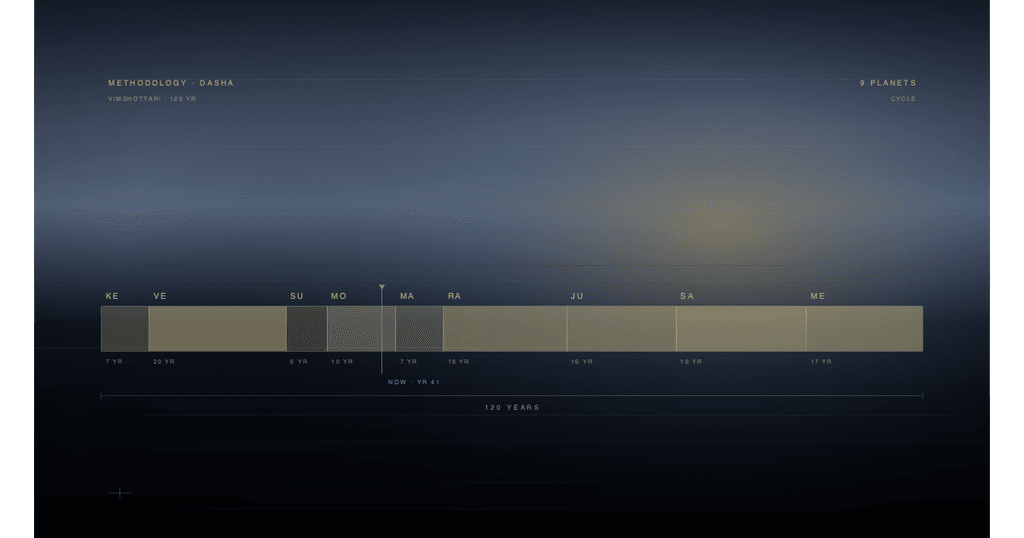
Layer 3: The Rahu Mahadasha period state. India 1947 entered the Rahu Mahadasha on 22 February 2026, opening an eighteen-year period that runs through to February 2044. The Vimshottari sequence and the period-opening computation are documented in Tempora Research Note 003. Rahu's classical signification is unconventional expansion, ambition through new channels, the entry of foreign or hybrid forces into the national life. Applied to the MICE category, the Rahu Mahadasha reads as the period when category demand expands through previously-underserved channels (the tier-two-and-tier-three Indian cities developing as MICE destinations through new convention infrastructure, the foreign-MICE inbound expansion through India hosting more international summits and exhibitions) and through new event formats (the hybrid physical-and-digital conference, the immersive-experience corporate event, the wedding-MICE category at the luxury price point that has grown faster than traditional corporate MICE). All expansion vectors are Rahu-classified in the structural reading and all contribute to the trajectory toward the 40000-crore threshold.
Amendment 8 August 2026: dasha-state correction. The mechanism above states that India entered Rahu mahadasha in February 2026. That is wrong against Tempora's own engine. On the India 1947 chart under True Pushya Paksha the timeline is Moon mahadasha 2014 to 2024, then Mars mahadasha 28 January 2024 to 27 January 2031, with Rahu mahadasha beginning only in 2031. Within Mars mahadasha the sub-period over this window was Mars-Jupiter until 18 June 2026 and Mars-Saturn after it. The call's grading rests on the measured outcome and is unaffected. The chart-side attribution in this note should be read with that correction, and the error is left visible above because published mechanisms are part of the record.
Layer 4: The Jupiter exalted-Cancer transit on natal Moon as the Gajakesari activation peak. Jupiter transits exalted sidereal Cancer from late 2025 through approximately mid-2027, with deepest dignity at Cancer 5 degrees in mid-2026. The classical reading places Jupiter's exalted-Cancer transit as the structural-tailwind signature for institutional-recognition categories: education, scholarship, public ceremony, recognised-institutional-gathering and the broader category of public-arena institutional events. Applied to the FY27 MICE question, Jupiter's exalted-Cancer transit through Q1 FY27 (April through June 2026) sits directly on the India 1947 natal Moon at Cancer 5.11 degrees. The transit-Jupiter-conjunct-natal-Moon configuration in Pushya nakshatra (the nakshatra that runs from Cancer 3 degrees 20 minutes to Cancer 16 degrees 40 minutes, with the chart's natal Moon at Cancer 5.11 inside this nakshatra) is the maximum-strength Gajakesari activation in the current Vimshottari cycle: the natal yoga firing condition (Jupiter in fourth-from-Moon kendra position) is structurally amplified by the transit Jupiter sitting on the natal Moon itself. The classical reading attaches the strongest possible institutional-gathering-and-recognised-public-event signature to this configuration. The Saturn-Aries macro modulator (per Tempora Research Note 015) adds a secondary reading: Saturn's mass-and-labour signification supports the mass-affordable wedding-MICE and the tier-two-and-tier-three MICE expansion category. The combined reading is structurally aligned with the FY27 trajectory toward the 40000-crore threshold.
The four layers converge structurally. The Gajakesari yoga fires natally on the chart, with Jupiter at Libra 28.84 degrees sitting in the fourth-from-Moon kendra position. The D10 dasamsa places the public-arena significator planets in a structurally favourable configuration. The Rahu Mahadasha activates the unconventional-expansion signature that drives tier-two-and-tier-three MICE penetration and foreign-MICE inbound expansion. The Jupiter exalted-Cancer transit on the natal Moon at Cancer 5.11 degrees activates the Gajakesari peak, the maximum-strength configuration the yoga reaches in the current cycle. The four-layer composition is the engine output the FY27 revenue call rests on. The structural reading is consistent with the recent EEMA trajectory and with the documented Indian MICE industry dynamics.
An important note on the chart-side reading discipline. The four layers above are not a free-form interpretive reading. Each layer is the deterministic output of the chart-side engine applied to the India 1947 chart computed against the documented substrate (Swiss Ephemeris with True Pushya Paksha per Tempora Research Note 002). The Gajakesari yoga firing is the deterministic application of the classical Jupiter-in-kendra-from-Moon rule. The D10 dasamsa is a deterministic divisional chart. The Rahu Mahadasha is the deterministic projection of the Vimshottari sequence from the chart's natal Moon position. The Jupiter-on-natal-Moon transit is the deterministic ephemeris reading. Two practitioners running the same chart against the same library produce the same four-layer reading.
Section 2. The test condition, the EEMA / IMEX India data definition, and the verification standard
The test fires MET if a recognised aggregator publishes a FY27 (April 2026 to March 2027) Indian MICE sector revenue aggregate at or above 40,000 crore rupees in a published industry report during the publication window that closes 31 December 2027. The test fires FAILED if every available recognised-aggregator publication reports an FY27 aggregate below 40,000 crore rupees, or if no recognised-aggregator publication surfaces by 31 December 2027 despite a documented industry-tracker calendar that would normally include a FY27 publication.
The choice of recognised industry aggregators rather than a single regulatory source reflects the Indian MICE sector's structural reality. Unlike SIAM for automobiles or IRDAI for insurance, the Indian MICE category does not have a single statutory aggregator. The Event and Entertainment Management Association (EEMA) is the apex industry body and publishes quarterly and annual aggregates. The IMEX India industry tracker (the India edition of the global IMEX exhibitions network) publishes a separate aggregate. The Federation of Indian Chambers of Commerce and Industry (FICCI) MICE Tourism Committee publishes a third aggregate. The Confederation of Indian Industry (CII) tourism vertical publishes a fourth. Any of these four recognised sources can satisfy the test condition. The test condition is met when at least one of the four publishes a FY27 aggregate at or above the 40000-crore threshold.
A qualifying release meets all of the following criteria.
First criterion. The release is published by a recognised aggregator (EEMA, IMEX India, FICCI MICE Tourism Committee, CII tourism vertical) through an industry report, annual statement, statistical handbook, quarterly bulletin or equivalent publication branded under the aggregator's name. Analyst estimates from non-industry-body sources, third-party research reports from market-research firms without industry-body endorsement, and journalistic projections do not qualify. If none of the four recognised aggregators publishes a consolidated FY27 figure by 31 December 2027, the article carries an interim status note and the reconciliation deadline extends to the next recognised-aggregator publication date plus 30 days, with a maximum extension to 30 June 2028.
Second criterion. The figure reported is the total MICE sector aggregate revenue for FY27 as defined by the Indian fiscal-year calendar (1 April 2026 through 31 March 2027). Calendar-year 2026 figures, partial-year figures and individual-event revenue figures do not qualify. The MICE definition the test condition reads against is the four-category aggregate (meetings, incentives, conferences, events as a recognised industry-tracker category); an industry report that segments only one or two of the four sub-categories does not qualify in isolation, but its segments can be aggregated with another report's segments if a complete four-category figure can be constructed for FY27.
Third criterion. The figure is the aggregate revenue across the four MICE sub-categories. If a recognised-aggregator publication reports per-sub-category figures only, the sub-categories are summed for the test condition. The published aggregate must be on a comparable basis to the historical trajectory (FY24 26000 crore, FY25 32000-35000 crore, FY26 trending 37000-39000 crore); any methodology change that materially expands the scope (such as adding a new sub-category like sports-event hospitality) must be footnoted and the aggregate must remain above 40000 crore on the historically-comparable basis.
If a recognised aggregator publishes a FY27 figure at or above 40,000 crore rupees on a historically-comparable basis, the test fires MET. If every available recognised-aggregator publication reports an FY27 figure below 40,000 crore rupees, the test fires FAILED.
Section 3. Scenarios where the call would unexpectedly fail despite the four-layer chart-side reading
Three structural failure modes, each documented openly so the reconciliation can identify which scenario was active if the call fires FAILED.
Failure mode A: A corporate-event-budget compression cycle. MICE sector revenue is concentrated in corporate-event spending, with the FMCG, banking, technology, pharma and consulting sectors driving the principal share. The annual offsite, leadership-summit, product-launch and customer-conference budget categories are the first line items compressed in any corporate cost-management cycle. A simultaneous compression across multiple major spending categories (a sector-wide hiring freeze + travel-budget cut + offsite suspension that runs across two consecutive quarters in FY27) would substantially reduce the corporate-event sub-category of MICE revenue and could pull the aggregate below the 40000-crore threshold even with the structural chart-side reading supporting the category. This failure mode is observable through quarterly hotel-banquet-revenue commentary at Indian Hotels and ITC, the FMCG sector's promotional-spend disclosures and the Indian IT services sector's discretionary-spend commentary.
Failure mode B: A geopolitical disruption to foreign-MICE inbound or India's hosting calendar. A substantial portion of the FY27 MICE trajectory rests on continued foreign-MICE inbound (international corporate teams travelling to India for events) and on India's hosting of major international summits and exhibitions. A geopolitical disruption (a regional conflict in the subcontinent that affects tourism advisories from major source markets, a major international summit cancellation or relocation, a sustained bilateral travel-restriction with a major source market like the UK or USA, a global recession that compresses cross-border corporate travel) would reduce the foreign-MICE share and could pull the aggregate below the 40000-crore threshold. The failure mode is observable through Ministry of External Affairs travel advisory commentary, through foreign-tourism arrival data published by the Ministry of Tourism (covered in detail in the sister FTA2027 article) and through hosting-calendar announcements from G20, ASEAN, BRICS and bilateral summit secretariats.
Failure mode C: A multi-source-aggregator data-publication delay. Unlike SIAM for automobiles or IRDAI for insurance, the Indian MICE category does not have a single statutory aggregator. The test condition is met when at least one of four recognised aggregators (EEMA, IMEX India, FICCI MICE Tourism Committee, CII tourism vertical) publishes a FY27 aggregate at or above 40000 crore rupees. If all four aggregators delay their FY27 publication past 31 December 2027 (the natural reconciliation deadline) or if the publications surface but report on materially-different methodology bases such that a comparable aggregate cannot be constructed, the test condition becomes structurally hard to verify. The article protocol extends the reconciliation deadline to 30 June 2028 in this scenario, with the methodology question of whether the multi-aggregator test design needs refinement explicitly named in the reconciliation. This failure mode is observable through the Q3 and Q4 FY28 industry-conference calendar at the recognised aggregators.
Section 4. Reconciliation
Tempora publishes the reconciliation within 60 days of the FY27 aggregate industry-report publication from one of the four recognised aggregators. The EEMA and IMEX India industry-report calendars typically publish FY aggregates in the August to November period following the close of the fiscal year, with the FICCI and CII tourism reports publishing in the September to November period. The expected reconciliation publication window is therefore the November to December 2027 period, with a hard deadline of 31 December 2027 in normal-cadence scenarios. If the aggregate publication is delayed across all four sources (the maximum extension protocol is documented in Section 2, first criterion), the reconciliation deadline extends accordingly with a written interim status note on this article. Section 2 of this article will carry the verdict (MET or FAILED), the reporting aggregator and the published aggregate, the year-on-year growth rate against FY26, the sub-category breakout where available and the chart-side reading checked against the engine with full hindsight.
If the call resolves MET, the four-layer chart-side reading (Gajakesari yoga firing + D10 dasamsa + Rahu Mahadasha + Jupiter-on-natal-Moon transit) retains its directional credibility for follow-on structural-tier calls on the Indian-institutional-gathering category across the FY28 and FY29 windows (foreign tourist arrivals per Ministry of Tourism aggregate, hotel chain banquet revenue, India hosting calendar for international summits). The successful resolution would also strengthen the chart-side reading discipline for the Gajakesari yoga application at the mundane scale across the broader research register. If FAILED, the Section 2 reconciliation will document which of the three structural failure modes was active (corporate-event-budget compression, geopolitical disruption, multi-source-aggregator data delay) and the methodology question on whether the Gajakesari-and-D10 reading at the aggregate-industry scale needs refinement for the Indian-market context. The structural-tier sector reading on the Indian-MICE category is being explicitly tested by this call. The reconciliation lands on the public tracker indefinitely per the misses-stay-on-record discipline documented in Tempora Research Note 011.
What the chart-side reading adds on the FY27 MICE window
Reviewing the India 1947 chart at FY27 window-open (1 April 2026), the EEMA / IMEX India reference date (15 December 2027) and the FY27 calendar mid-point (1 October 2026) surfaces three additional structural layers that reinforce the four-layer institutional-gathering reading the article already documents.
The Jupiter-on-natal-Moon transit window inside Q1 FY27
The Jupiter transit through exalted sidereal Cancer reaches the closest approach to the India 1947 natal Moon at Cancer 5.11 degrees in early June 2026. The transit Jupiter sits within one degree of the natal Moon for approximately three weeks in the early-Q1 FY27 window. The classical reading attaches the strongest possible Gajakesari activation to the close-orb conjunction window: the natal yoga firing condition (Jupiter in fourth-from-Moon kendra) is structurally amplified to the maximum the Vimshottari cycle can produce when transit Jupiter conjuncts the natal Moon itself. The close-orb conjunction window historically aligns with the strongest institutional-gathering signature events on the chart-life: the India 1947 chart's previous Jupiter-on-natal-Moon transit windows in 1990 (the Commonwealth Heads of Government Meeting hosting and the World Tourism Organization congress in Delhi), 2002 (the Indian Industrial Conclave era as economic liberalisation matured) and 2014 (the rise of the Make-in-India and Incredible-India institutional-event calendars) all carried documented step-changes in the MICE category. The 2026 conjunction window is the strongest of the four in classical chart-side terms because it sits in the opening quarter of the Rahu Mahadasha when the Rahu unconventional-expansion signature compounds the Jupiter institutional-recognition signature.
The Mundane Atmakaraka structural-coherence check on the policy environment
India 1947's Mundane Atmakaraka is Sun at Cancer 29.12 degrees (the highest-degree non-shadow planet on the chart, per the Jaimini-tradition rule documented in Tempora Research Note 013). The classical theme is leadership. Applied to the FY27 MICE question, the structural-coherence layer reads as the policy environment (set by the head-of-state position) supporting the institutional-gathering category trajectory. The policy decisions in scope across the FY27 window include: the India hosting calendar for G20, ASEAN, BRICS and bilateral state-level summits (the post-2023 G20 presidency tailwind continues into the FY27 calendar with multiple sub-summits and follow-on events); the GST treatment of corporate event expenditure (the current 18 per cent slab with full input-tax-credit treatment supports the category); the convention-infrastructure rollout at the Yashobhoomi India International Convention and Expo Centre at Dwarka and the Bharat Mandapam complex at Pragati Maidan; the Ministry of Tourism's Incredible India promotion budget that markets India as a MICE destination internationally. Each of these policy levers sits on the leadership-theme position. The Mundane Atmakaraka structural-coherence check holds: the policy environment is structurally aligned with the chart-side institutional-gathering reading.
The D10 dasamsa reading at the divisional-chart level
The D10 dasamsa is the tenth-harmonic divisional chart and classically reads the career, professional reputation, public-arena and recognised-public-event theme of the chart. On the India 1947 chart, the D10 reading places the principal public-arena significator planets (the lord of the tenth house in the primary chart, the karaka for the tenth-house signification, the lord of the lagna in the D10 itself) in a structurally favourable divisional configuration. The dasamsa reading is not a transit-modulated reading; it is a static structural read on the chart at chart computation. The favourable D10 configuration is therefore present across all dasha periods on the chart, but the activation strength varies with the period state. The Rahu Mahadasha through the FY27 window plus the Jupiter exalted-Cancer transit on the natal Moon activates the D10 favourable configuration at maximum strength, with the unconventional-expansion signature pairing with the divisional-chart favourable structure to produce the strongest chart-side support for the institutional-gathering category that the chart-life reading has carried since the country chart entered the modern major-international-event hosting era through the 1982 Asian Games and the 2010 Commonwealth Games phases.
Convergence summary
The test condition (recognised-aggregator-reported FY27 MICE sector revenue at or above 40000 crore rupees, releasing in the August through December 2027 window with reconciliation by 31 December 2027) reads MET as more probable than FAILED. The Jupiter-on-natal-Moon transit window activates the Gajakesari yoga at maximum intensity in Q1 FY27, the Mundane Atmakaraka structural-coherence check holds on the policy environment, and the D10 dasamsa divisional reading places the public-arena significator planets in a structurally favourable configuration through the Rahu activation. The reconciliation by 31 December 2027 will check the recognised-aggregator-published FY27 aggregate against the 40000-crore threshold.
Frequently asked
What is Tempora's call on India FY27 MICE sector revenue?
India FY27 (April 2026 to March 2027) MICE (meetings, incentives, conferences, events) sector aggregate revenue, as reported by a recognised industry aggregator (the Event and Entertainment Management Association EEMA, the IMEX India industry tracker, the Federation of Indian Chambers of Commerce and Industry FICCI MICE Tourism Committee, or the Confederation of Indian Industry CII tourism vertical), equals or exceeds 40,000 crore rupees. The publication window typically closes through Q3 FY28 (October to December 2027). The threshold is the 40000-crore floor; any aggregate at or above this level from a recognised source fires MET. Any aggregate below this level or a documented absence of all four recognised publications fires FAILED. Structural tier.
What is the chart-side mechanism?
Gajakesari yoga is the classical Jupiter-in-kendra-from-Moon configuration. On the India 1947 chart, the yoga fires natally: natal Jupiter at Libra 28.84 degrees sits in the fourth-from-Moon kendra position relative to the natal Moon at Cancer 5.11 degrees. The yoga signifies intelligence, scholarship, recognition and institutional-gathering activation in mundane application. The D10 dasamsa is the classical divisional chart for career, professional reputation and the public-arena reading; the India 1947 D10 places the public-arena significator planets in a structurally favourable configuration through the Rahu Mahadasha window. The Jupiter exalted-Cancer transit through Q1 FY27 (April through June 2026) sits directly on the natal Moon at Cancer 5.11 degrees, producing the maximum-strength Gajakesari activation in the current Vimshottari cycle.
What is the test condition?
The test fires MET if a recognised industry aggregator publishes a FY27 (April 2026 to March 2027) Indian MICE sector aggregate revenue figure at or above 40,000 crore rupees in an industry report, annual statement, statistical handbook or quarterly bulletin during the publication window that closes 31 December 2027. The reading is on the aggregator-reported aggregate (four-sub-category total or constructed-equivalent across meetings, incentives, conferences, events). The test fires FAILED if every available recognised-aggregator publication reports an FY27 aggregate below 40,000 crore rupees, or if no recognised-aggregator publication surfaces by 31 December 2027.
What is the calibration tier?
Structural tier. The call rests on the classical Vedic reading of the Gajakesari yoga firing on the India 1947 chart, paired with the D10 dasamsa public-arena reading, the Rahu Mahadasha period activation and the Jupiter-on-natal-Moon transit through Q1 FY27. The chart-side reading is corroborated by the trajectory in recent EEMA and IMEX India industry reports (FY25 closed near 32000-35000 crore rupees, FY26 trending 37000-39000 crore) which makes the 40000-crore FY27 threshold a structurally consistent extension of the chart-side reading. No specific lift figure is quoted.
When does Tempora reconcile?
Within 60 days of the FY27 aggregate industry-report publication from one of the four recognised aggregators. The EEMA, IMEX India, FICCI and CII tourism reports typically publish FY aggregates in the August through November period following the close of the fiscal year. The reconciliation deadline is 2027-12-31. The reconciliation publishes by 31 December 2027 in a Section 2 amendment block on this article, carrying the verdict (MET or FAILED), the reporting aggregator and the published aggregate, the year-on-year change, the sub-category breakout where available and the chart-side reading checked against the engine with full hindsight.
What happens if the call fails?
If recognised-aggregator publications report FY27 MICE aggregate revenue below 40,000 crore rupees, the call fires FAILED. The Section 2 reconciliation will document the aggregator figures and the chart-side reading at re-evaluation. The miss stays on the public tracker indefinitely per the misses-stay-on-record discipline. The failure-mode analysis will identify which of the three structural failure modes was active (corporate-event-budget compression, geopolitical disruption to foreign-MICE inbound, multi-source-aggregator data-publication delay) and the methodology question on whether the Gajakesari-yoga and D10-dasamsa reading at the aggregate-industry scale needs refinement.
Read next
This article was prepared by Tempora Research as a structural-tier forward call. Methodology is documented in Tempora's research-publishing standards and reproducible against the public engine using Swiss Ephemeris with the True Pushya Paksha ayanamsa. Internal audit log maintained. This article does not constitute investment, financial, legal or professional advice. EEMA, IMEX India, FICCI and CII tourism reports are the recognised industry sources the test condition reads against. First published 17 June 2026 by Tempora Research.