Moon-ruled nakshatras, the 10-year group.
Moon rules three of the 27 nakshatras: Rohini, Hasta and Shravana. When the natal Moon falls in any of them, the chart owner opens life in the 10-year Moon mahadasha. The macro register is Moon's shared karaka signature, modulated by each nakshatra's deity, sign and pada.
The three nakshatras at a glance
| Nakshatra | Deity | Range | Symbol |
|---|---|---|---|
| Rohini | Brahma / Prajapati | 10°00' to 23°20' Taurus | cart / temple |
| Hasta | Savitar | 10°00' to 23°20' Virgo | hand or palm |
| Shravana | Vishnu | 10°00' to 23°20' Capricorn | three footprints (also the ear) |
What Moon rules and how that shapes the group
Moon-ruled nakshatras carry the mind-and-mother register: emotional receptivity, nurture-axis disposition, the chart owner's relationship to comfort, fluidity and the mental processing axis. The Moon is the karaka for mind, mother, emotional foundation, comfort and the cyclic register. The three Moon-ruled nakshatras inherit this and modulate through Earth-element signs (Taurus, Virgo, Capricorn) producing distinctively material-axis registers.
How the three members differ
Rohini
Rohini runs 10°00' to 23°20' Taurus. The presiding deity is Brahma / Prajapati, the symbol is the cart / temple and the register is sensory beauty and material abundance. Read the full reading at Rohini nakshatra.
Hasta
Hasta runs 10°00' to 23°20' Virgo. The presiding deity is Savitar, the symbol is the hand or palm and the register is manual skill and craft. Read the full reading at Hasta nakshatra.
Shravana
Shravana runs 10°00' to 23°20' Capricorn. The presiding deity is Vishnu, the symbol is the three footprints (also the ear) and the register is listening capacity and wisdom-reception. Read the full reading at Shravana nakshatra.
Moon in any of these three opens the Moon mahadasha
The 10-year Moon mahadasha activates emotional, nurture and mental-axis themes. When the natal Moon falls in Rohini, Hasta or Shravana, the opening Moon mahadasha foregrounds the chart's relationship to sensory comfort (Rohini), skilled manifestation (Hasta) or received wisdom (Shravana). All three nakshatras sit at the 10°00'-23°20' range of their respective signs, the middle band where the Moon's natural register operates most fully.
Sub-period activation through the Moon period
Inside the 10-year Moon mahadasha, the Vimshottari antardasha sequence runs through all 9 planets in proportion to their mahadasha lengths. Each antardasha activates a different karaka pairing with the Moon mahalord. Sub-periods of friend-planets to Moon read constructively, sub-periods of enemy-planets read more challenging. The full antardasha structure is covered in the Moon mahadasha overview.
What this group does not predict
Ruler-group membership reads the macro register of the Moon mahadasha and the shared Moon karaka signature. It does not generate forward calls by itself. Calibration is by chart and signature class, not by ruler group. The personal-chart reading depends on the Moon's specific nakshatra (Krittika reads differently from Uttara Ashadha), the Moon's pada, the natal house of the Moon, the dispositor's strength and the running transit picture. The framework is explicit about this scope limit.
FAQ
How long is the Moon mahadasha in the Vimshottari sequence?
The Moon mahadasha runs 10 years. It activates when the natal Moon falls in any of the three Moon-ruled nakshatras: Rohini, Hasta or Shravana. The exact degree of the Moon inside the nakshatra fixes how much of the Moon mahadasha remains at birth.
What is the shared register of the Moon-ruled nakshatras?
All three carry Moon's karaka register at the macro level. They then split into distinct readings by sign placement, presiding deity and pada structure. What stays constant is the 10-year mahadasha length and the underlying Moon register.
How do the three Moon-ruled nakshatras differ?
Rohini reads as sensory beauty and material abundance. Hasta reads as manual skill and craft. Shravana reads as listening capacity and wisdom-reception. All three carry Moon's shared register but the deity and sign placement determine which dimension foregrounds in a given chart.
Does the Moon-ruled group share a calibrated firing pattern on the corpus?
The three nakshatras share the Moon mahadasha length but do not share calibrated forward-call windows automatically. Calibration is by chart and signature class, not by ruler group. The individual nakshatra readings carry calibrated context where it exists.
Where does the Moon mahadasha sit in the 120-year cycle?
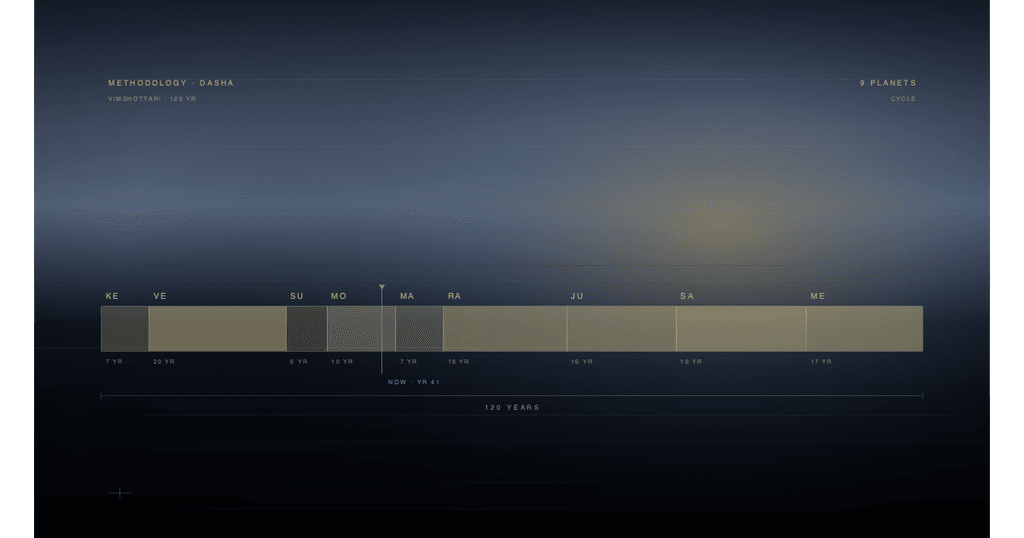
The Vimshottari mahadasha sequence runs Ketu 7, Venus 20, Sun 6, Moon 10, Mars 7, Rahu 18, Jupiter 16, Saturn 19, Mercury 17. total 120 years. The Moon mahadasha enters the sequence whenever the previous mahadasha closes. The entry point on a personal chart depends entirely on the natal Moon nakshatra and degree.
- The full Nakshatra cluster · all 27 nakshatras and the 9 ruling-planet groups
- Moon major period · the 10-year overview and sub-period structure
- Ketu-ruled nakshatras
- Venus-ruled nakshatras
- Sun-ruled nakshatras
- Mars-ruled nakshatras
- Rahu-ruled nakshatras
- Jupiter-ruled nakshatras
- Saturn-ruled nakshatras
- Mercury-ruled nakshatras
This article was prepared by Tempora Research as an informational piece in the Nakshatra cluster. Methodology, calibrated lift figures and reconciliation entries are documented in Tempora's research-publishing standards and reproducible against the public engine. Internal audit log maintained. This article does not constitute medical, financial, legal or professional advice. First published 2026-05-29 by Tempora Research.